AMG School of Licensed Practical Nursing
NURSING 241 Either exam 2 or 3
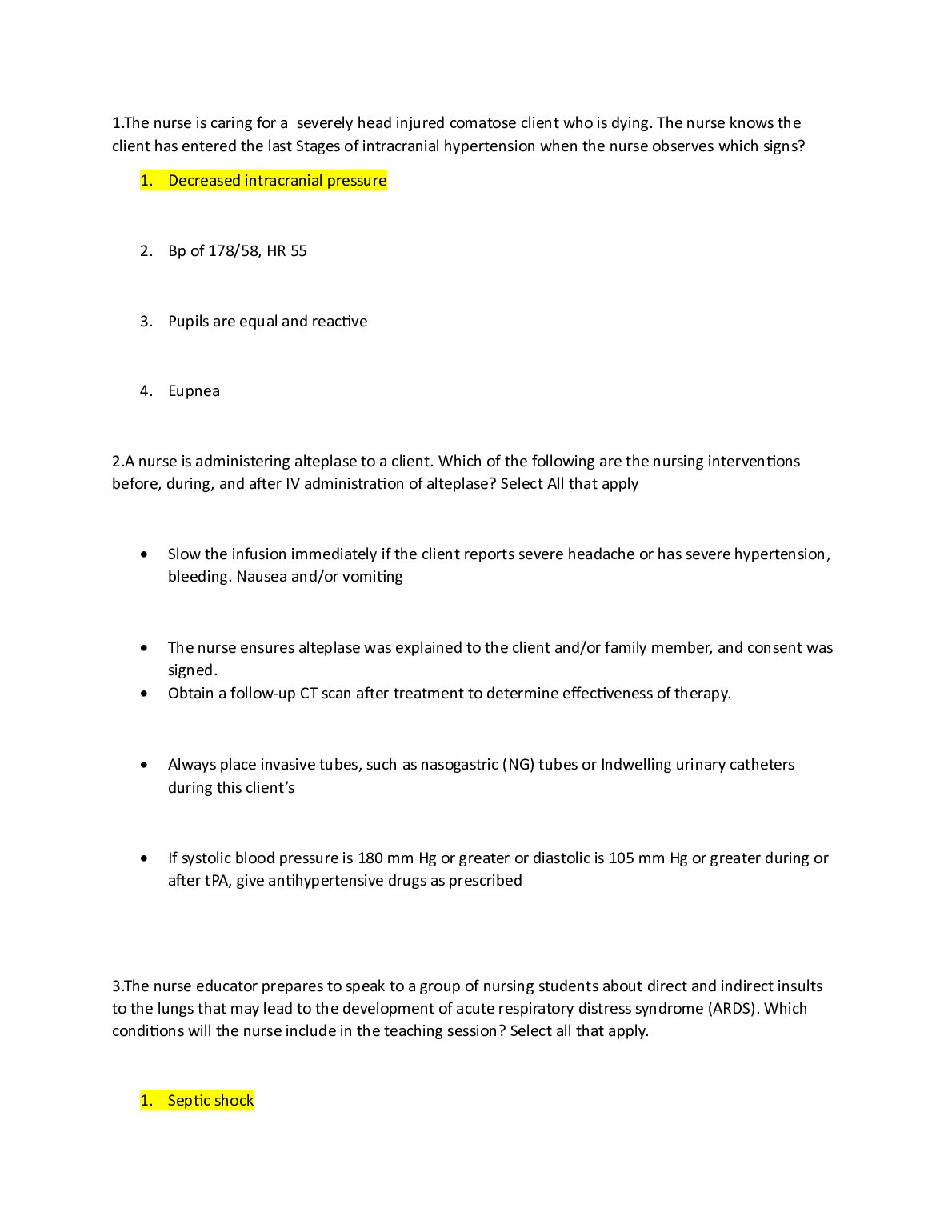
1.The nurse is caring for a severely head injured comatose client who is dying. The nurse knows the client has entered the last Stages of intracranial hypertension when the nurse observes which signs?
1. Decreased intracranial pressure
2. Bp of 178/58, HR 55
3. Pupils are equal and reactive
...[Show More]
1.The nurse is caring for a severely head injured comatose client who is dying. The nurse knows the client has entered the last Stages of intracranial hypertension when the nurse observes which signs?
1. Decreased intracranial pressure
2. Bp of 178/58, HR 55
3. Pupils are equal and reactive
4. Eupnea
2.A nurse is administering alteplase to a client. Which of the following are the nursing interventions before, during, and after IV administration of alteplase? Select All that apply
• Slow the infusion immediately if the client reports severe headache or has severe hypertension,
bleeding. Nausea and/or vomiting
• The nurse ensures alteplase was explained to the client and/or family member, and consent was
signed.
• Obtain a follow-up CT scan after treatment to determine effectiveness of therapy.
• Always place invasive tubes, such as nasogastric (NG) tubes or Indwelling urinary catheters
during this client’s
• If systolic blood pressure is 180 mm Hg or greater or diastolic is 105 mm Hg or greater during or
after tPA, give antihypertensive drugs as prescribed
3.The nurse educator prepares to speak to a group of nursing students about direct and indirect insults to the lungs that may lead to the development of acute respiratory distress syndrome (ARDS). Which conditions will the nurse include in the teaching session? Select all that apply.
1. Septic shock
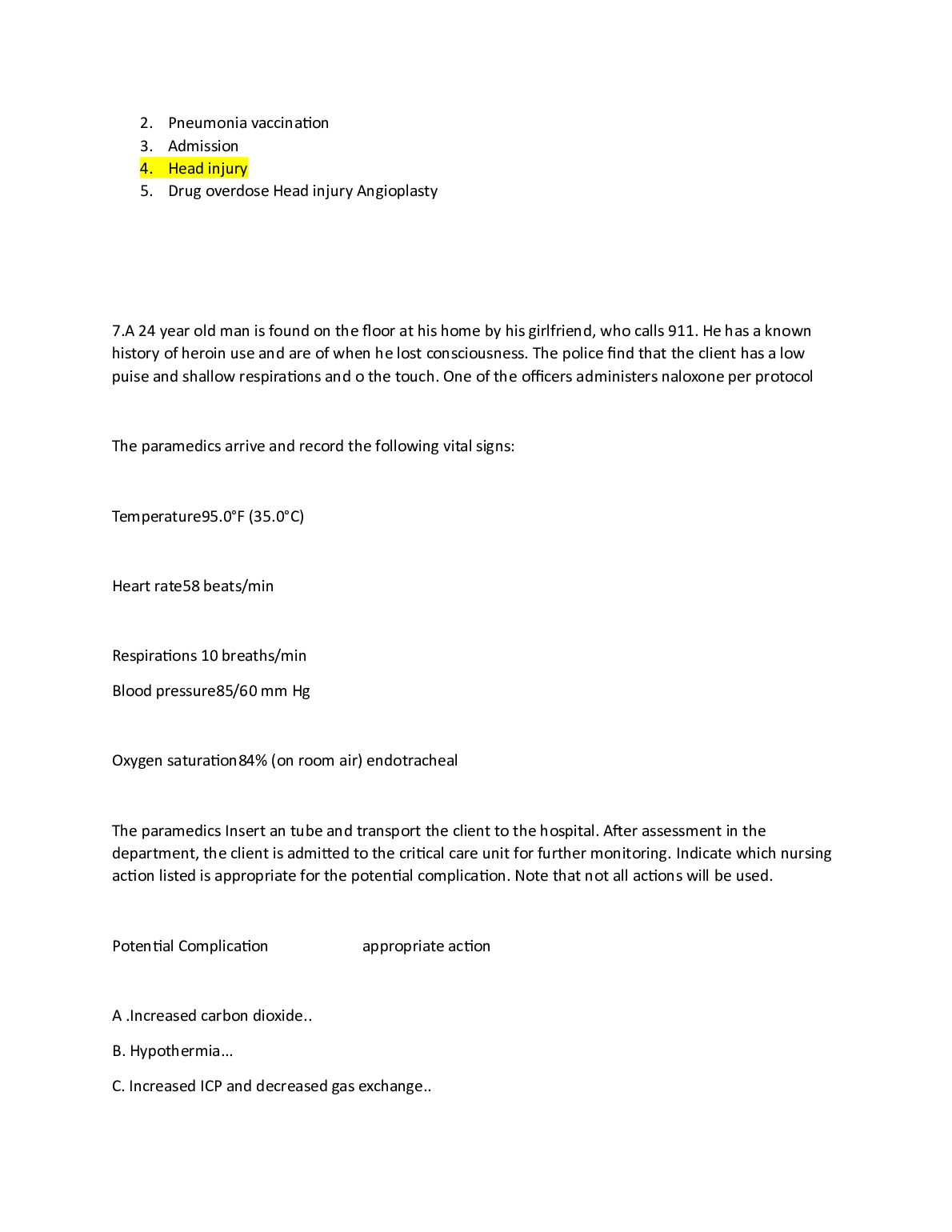
2. Pneumonia vaccination
3. Admission
4. Head injury
5. Drug overdose Head injury Angioplasty
7.A 24 year old man is found on the floor at his home by his girlfriend, who calls 911. He has a known history of heroin use and are of when he lost consciousness. The police find that the client has a low puise and shallow respirations and o the touch. One of the officers administers naloxone per protocol
The paramedics arrive and record the following vital signs:
Temperature95.0°F (35.0°C)
Heart rate58 beats/min
Respirations 10 breaths/min
Blood pressure85/60 mm Hg
Oxygen saturation84% (on room air) endotracheal
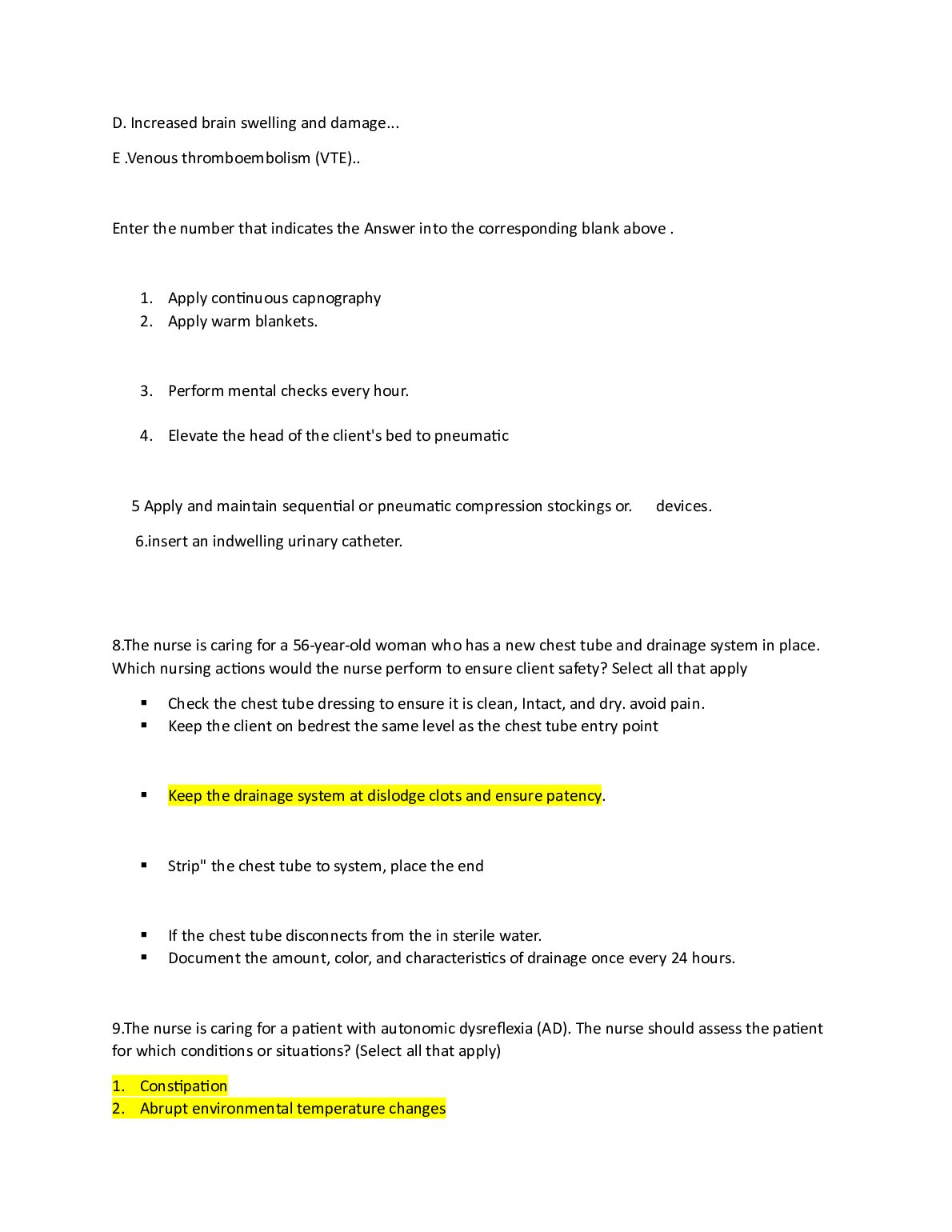
The paramedics Insert an tube and transport the client to the hospital. After assessment in the department, the client is admitted to the critical care unit for further monitoring. Indicate which nursing action listed is appropriate for the potential complication. Note that not all actions will be used.
Potential Complication appropriate action
A .Increased carbon dioxide..
B. Hypothermia...
C. Increased ICP and decreased gas exchange..
[Show Less]