New York University
NUTR-UE 119-001
Nutrition & Health Midterm
Chapter 1
6 Classes of Nutrients—from plants & animals that eat plants
1. Carbs
2. Lipids
3. Proteins
4. Vitamins
5. Minerals
6. Water
ORGANIC— carb, lipids, proteins
Energy yielding:
• carb 4 cal/g
• lipids 9 cal/g
• proteins 4 cal/g
• alcohol 7 cal/g
NO EN
...[Show More]
Nutrition & Health Midterm
Chapter 1
6 Classes of Nutrients—from plants & animals that eat plants
1. Carbs
2. Lipids
3. Proteins
4. Vitamins
5. Minerals
6. Water
ORGANIC— carb, lipids, proteins
Energy yielding:
• carb 4 cal/g
• lipids 9 cal/g
• proteins 4 cal/g
• alcohol 7 cal/g
NO ENERGY (some essential): vitamins and minerals
all vitamins and minerals act as REGULATORS—assist in all body processes: digesting food; moving
muscles; disposing of wastes; growing new tissues; healing wounds; obtaining energy
Calorie
Calories in nutrients
Energy content measured in calories units of energy. In nutrition science, the unit used to measure
the energy in foods is a kilocalorie (also called kcalorie or Calorie): it is the amount of heat energy
necessary to raise the temperature of a kilogram (a liter) of water 1 degree Celsius.
Nutrients:
- Essential nutrients— body
cannot make it; must be
provided in DIET
ex. iron, Ca, vitamin A, C, B6, D
- Energy Yielding Nutrients—
carbs, lipids, proteins, alcohol
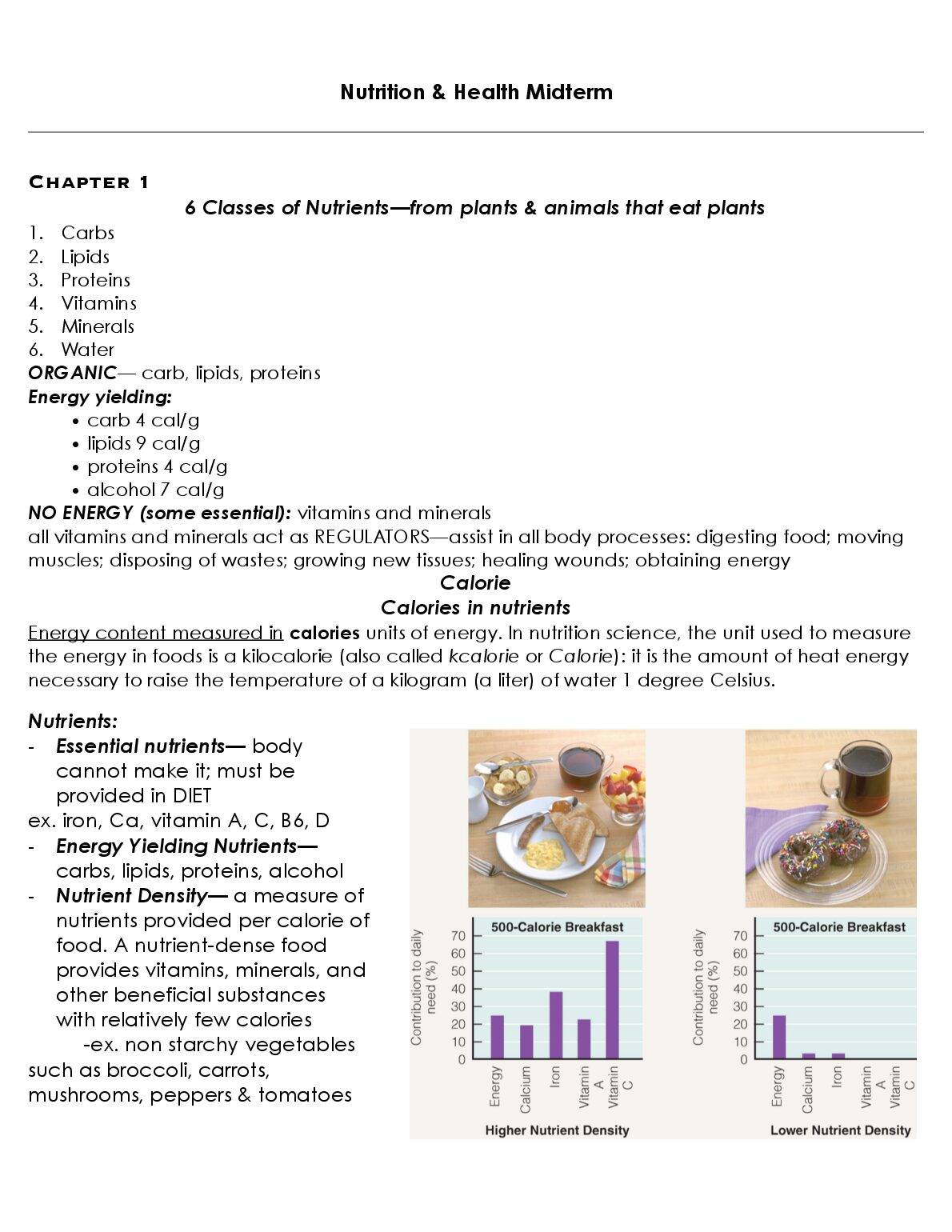
- Nutrient Density— a measure of
nutrients provided per calorie of
food. A nutrient-dense food
provides vitamins, minerals, and
other beneficial substances
with relatively few calories
-ex. non starchy vegetables
such as broccoli, carrots,
mushrooms, peppers & tomatoes
- Required Nutrients
Enriched & Fortified Foods
-foods to which nutrients have been added. If the starting material is a whole, basic food
such as milk or whole grain, the result may be highly nutritious. If the starting material is a
concentrated form of sugar or fat, the result may be less nutritious
ex.thiamin, riboflavin, niacin, folate, and iron
Dietary Guidelines for Americans (every 5 yrs)—ages 2+
1. Balance calories to manage a healthy body weight.
2. Increase intakes of certain nutrient-dense foods.
3. Reduce intakes of certain foods and food components.
4. Build a healthy eating pattern.
Healthy People: Nutrition Objectives for the Nation (Published by U.S. Department of Health
and Human Services)
Lists specific objectives
• Chronic diseases—reduce osteoporosis, cancer, diabetes, heart disease, stroke
• Food safety—#1 task— to reduce microbial food poisoning; reduce allergic reactions
• Maternal, infant, and child health—reduce premature & low weight babies, FAS, iron deficiency
—increase schools offering breakfast
• Food & Nutrient consumption—increase vegetables, fruits and whole grains (80% of pop. do not
consume enough
• Eating Disorders—reduce in adolescents
• Physical activity—reduce obesity & require daily PE for students
• Food security—eliminate low food security
Malnutrition & Chronic Diseases
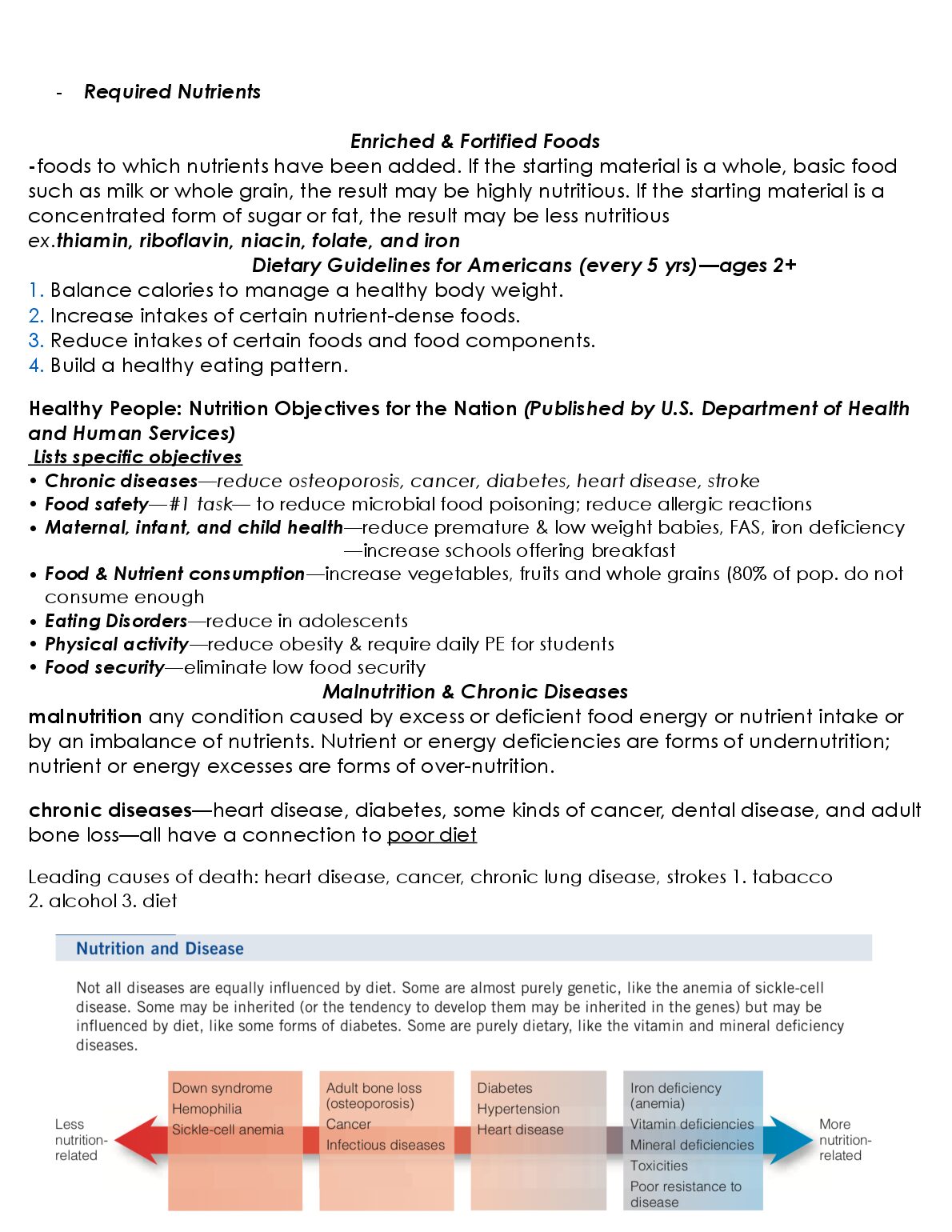
malnutrition any condition caused by excess or deficient food energy or nutrient intake or
by an imbalance of nutrients. Nutrient or energy deficiencies are forms of undernutrition;
nutrient or energy excesses are forms of over-nutrition.
chronic diseases—heart disease, diabetes, some kinds of cancer, dental disease, and adult
bone loss—all have a connection to poor diet
Leading causes of death: heart disease, cancer, chronic lung disease, strokes 1. tabacco
2. alcohol 3. diet
Can I Live on Just Supplements?
• Elemental diets
– Formula administered to severely ill people
– Cannot help people thrive
• Food is superior to supplements
– Nutrient interactions
• Phytochemicals
– Bioactive food components affect disease risk
– Physical and emotional comfort
Recognizing a Nutritious Diet AKA eating pattern
Five characteristics
1. Adequacy—the foods provide enough of each essential nutrient, fiber, and energy.
ex. iron—meat, fish, legumes
2. Balance—the choices do not overemphasize one nutrient or food type at the expense
of another
3. Calorie control—the foods provide the amount of energy you need to maintain
appropriate weight—not more, not less
4. Moderation—the foods do not provide excess fat, salt, sugar, or other unwanted
constituents.
5. Variety—the foods chosen differ from one day to the next.
Enriched— grains & bread products— add backing something loss
Fortified— adding something that was never there in the first place—iodine, folate
[Show Less]