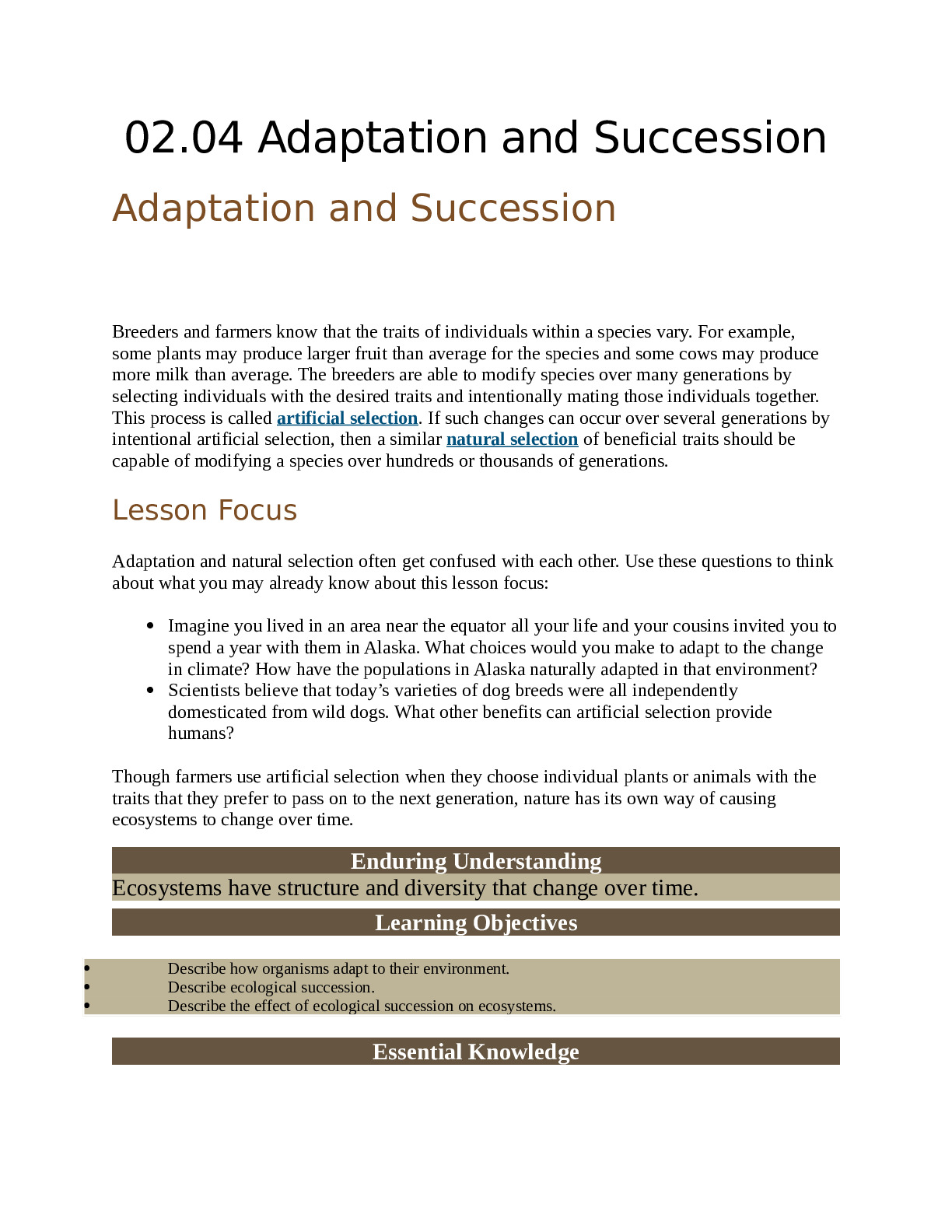
02.04 Adaptation and Succession
Adaptation and Succession
Breeders and farmers know that the traits of individuals within a species vary. For example,
some plants may produce larger fruit than average for the species and some cows may produce
more milk than average. The breeders are able to modify species over many generations by
selecting individuals with the desired traits and intentionally
...[Show More]
02.04 Adaptation and Succession
Adaptation and Succession
Breeders and farmers know that the traits of individuals within a species vary. For example,
some plants may produce larger fruit than average for the species and some cows may produce
more milk than average. The breeders are able to modify species over many generations by
selecting individuals with the desired traits and intentionally mating those individuals together.
This process is called artificial selection. If such changes can occur over several generations by
intentional artificial selection, then a similar natural selection of beneficial traits should be
capable of modifying a species over hundreds or thousands of generations.
Lesson Focus
Adaptation and natural selection often get confused with each other. Use these questions to think
about what you may already know about this lesson focus:
Imagine you lived in an area near the equator all your life and your cousins invited you to
spend a year with them in Alaska. What choices would you make to adapt to the change
in climate? How have the populations in Alaska naturally adapted in that environment?
Scientists believe that today’s varieties of dog breeds were all independently
domesticated from wild dogs. What other benefits can artificial selection provide
humans?
Though farmers use artificial selection when they choose individual plants or animals with the
traits that they prefer to pass on to the next generation, nature has its own way of causing
ecosystems to change over time.
[Show Less]
![MGT 301 Business Strategy Chapter_Review Study Sheet_ Comprehensive Study Guide & Solutions] preview image](https://browseimages.nyc3.digitaloceanspaces.com/unlock-images/2026/Oct/14/paper-104210-preview-1-NfnUEH.jpg)