University of Texas
O M 386
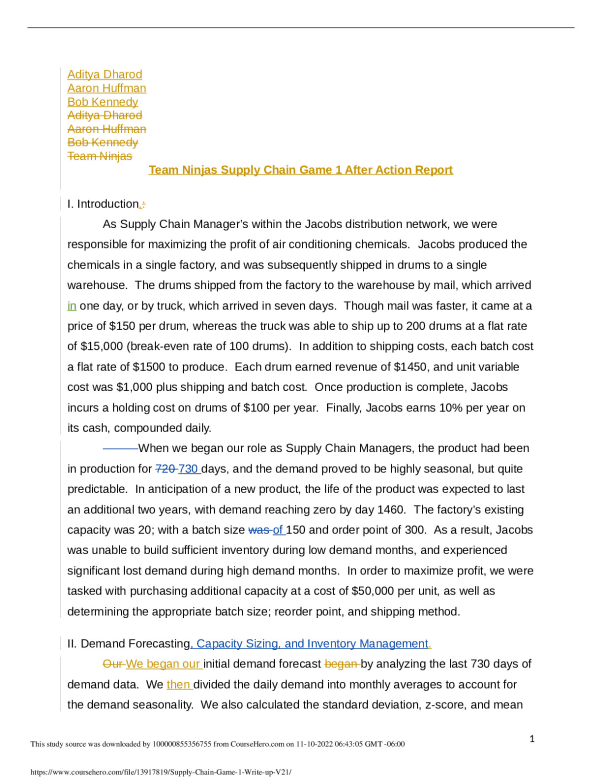
Team Ninjas Supply Chain Game 1 After Action Report I. Introduction.: As Supply Chain Manager’s within the Jacobs distribution network, we were responsible for maximizing the profit of air conditioning chemicals. Jacobs produced the chemicals in a single factory, and was subsequently shipped in drums to a single warehouse. The drums shipped from
...[Show More]
Team Ninjas Supply Chain Game 1 After Action Report I. Introduction.: As Supply Chain Manager’s within the Jacobs distribution network, we were responsible for maximizing the profit of air conditioning chemicals. Jacobs produced the chemicals in a single factory, and was subsequently shipped in drums to a single warehouse. The drums shipped from the factory to the warehouse by mail, which arrived in one day, or by truck, which arrived in seven days. Though mail was faster, it came at a price of $150 per drum, whereas the truck was able to ship up to 200 drums at a flat rate of $15,000 (break-even rate of 100 drums). In addition to shipping costs, each batch cost a flat rate of $1500 to produce. Each drum earned revenue of $1450, and unit variable cost was $1,000 plus shipping and batch cost. Once production is complete, Jacobs incurs a holding cost on drums of $100 per year. Finally, Jacobs earns 10% per year on its cash, compounded daily. When we began our role as Supply Chain Managers, the product had been in production for 720 730 days, and the demand proved to be highly seasonal, but quite predictable. In anticipation of a new product, the life of the product was expected to last an additional two years, with demand reaching zero by day 1460. The factory’s existing capacity was 20; with a batch size was of 150 and order point of 300. As a result, Jacobs was unable to build sufficient inventory during low demand months, and experienced significant lost demand during high demand months. In order to maximize profit, we were tasked with purchasing additional capacity at a cost of $50,000 per unit, as well as determining the appropriate batch size; reorder point, and shipping method. II. Demand Forecasting, Capacity Sizing, and Inventory
[Show Less]