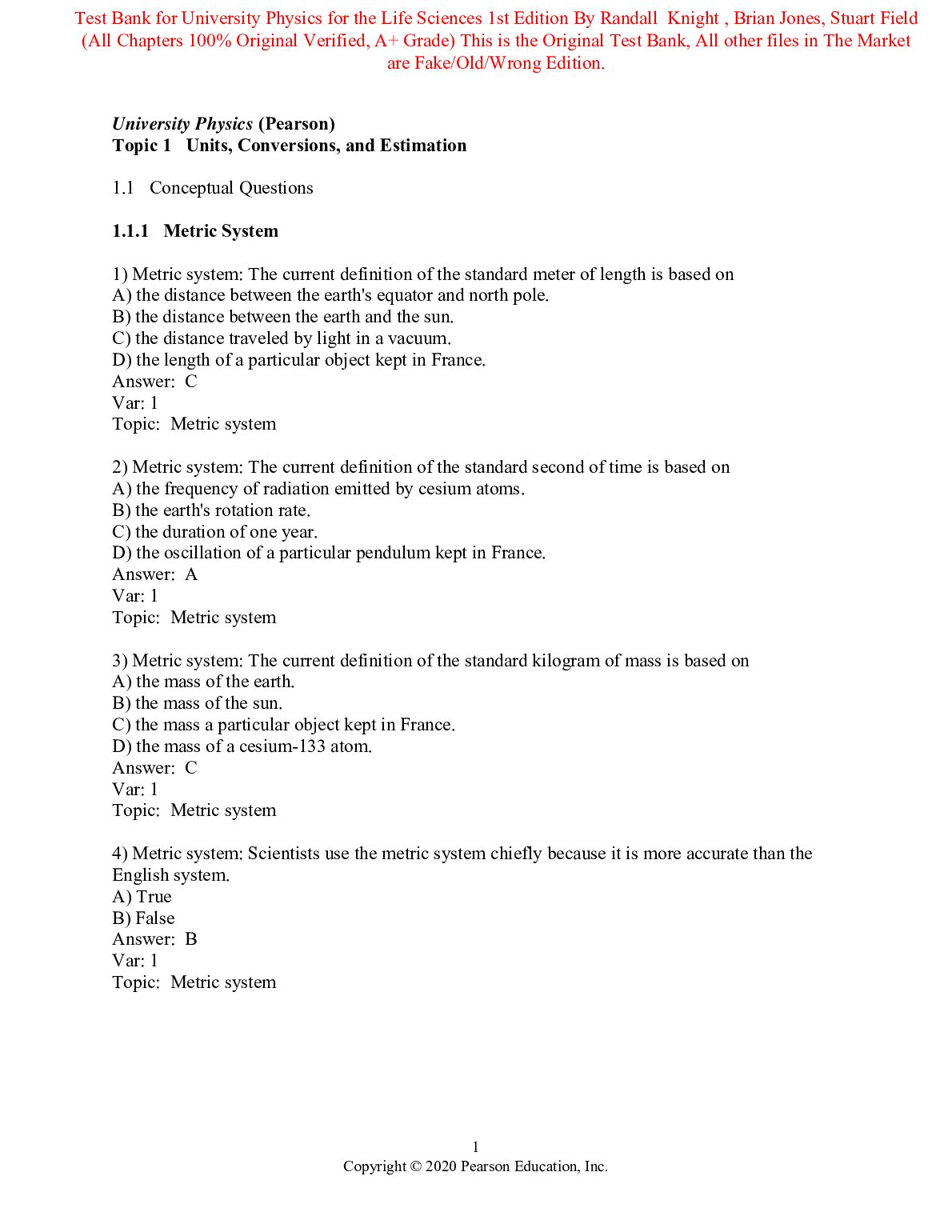
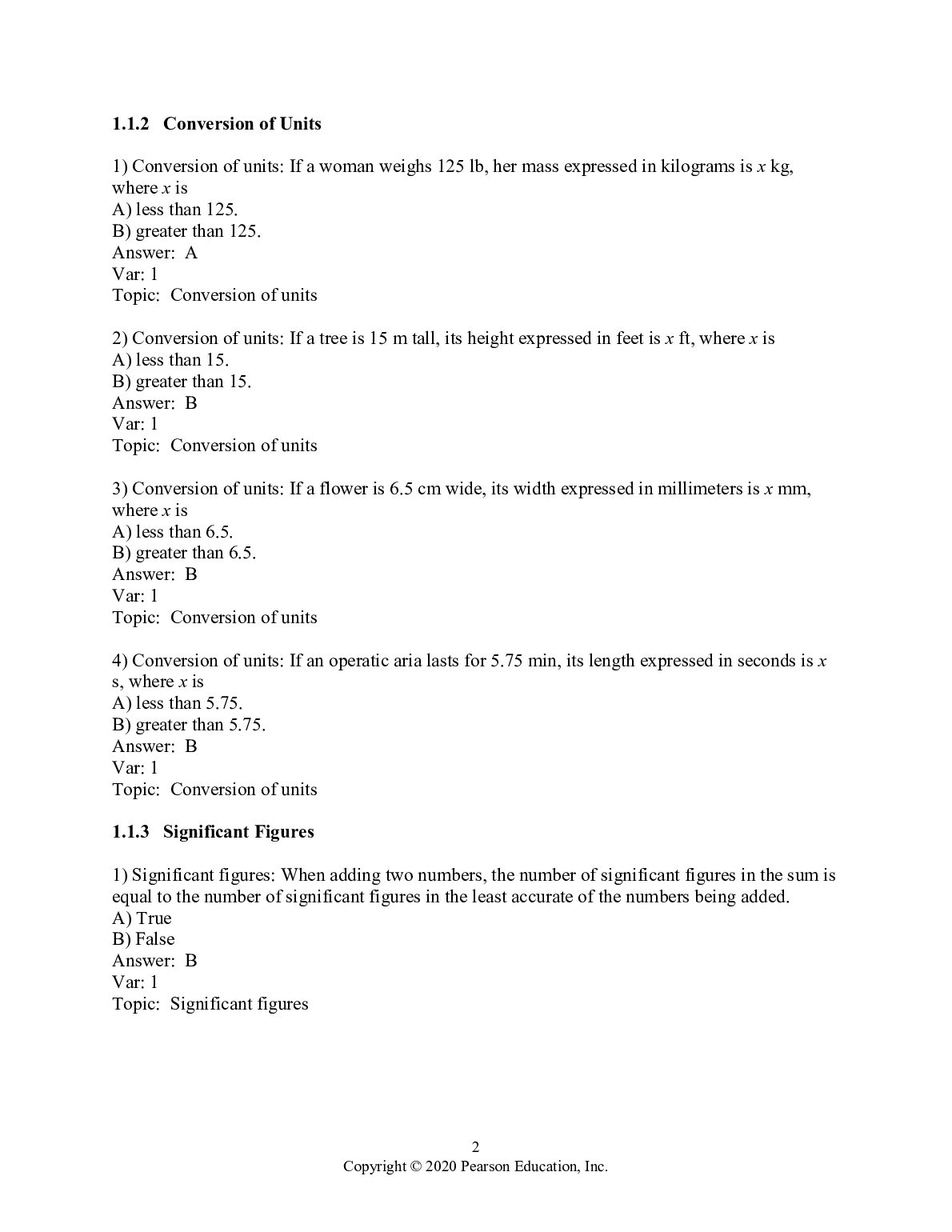
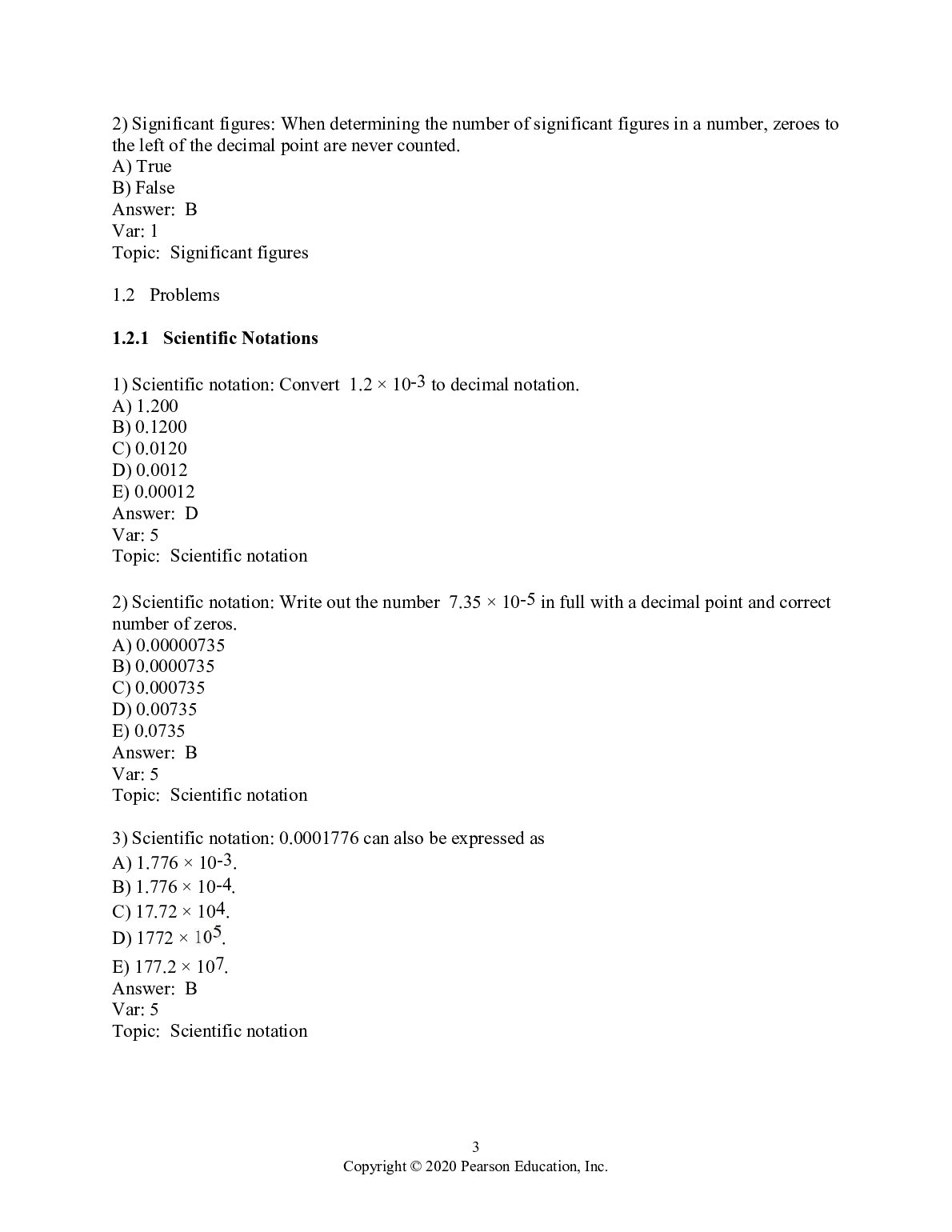
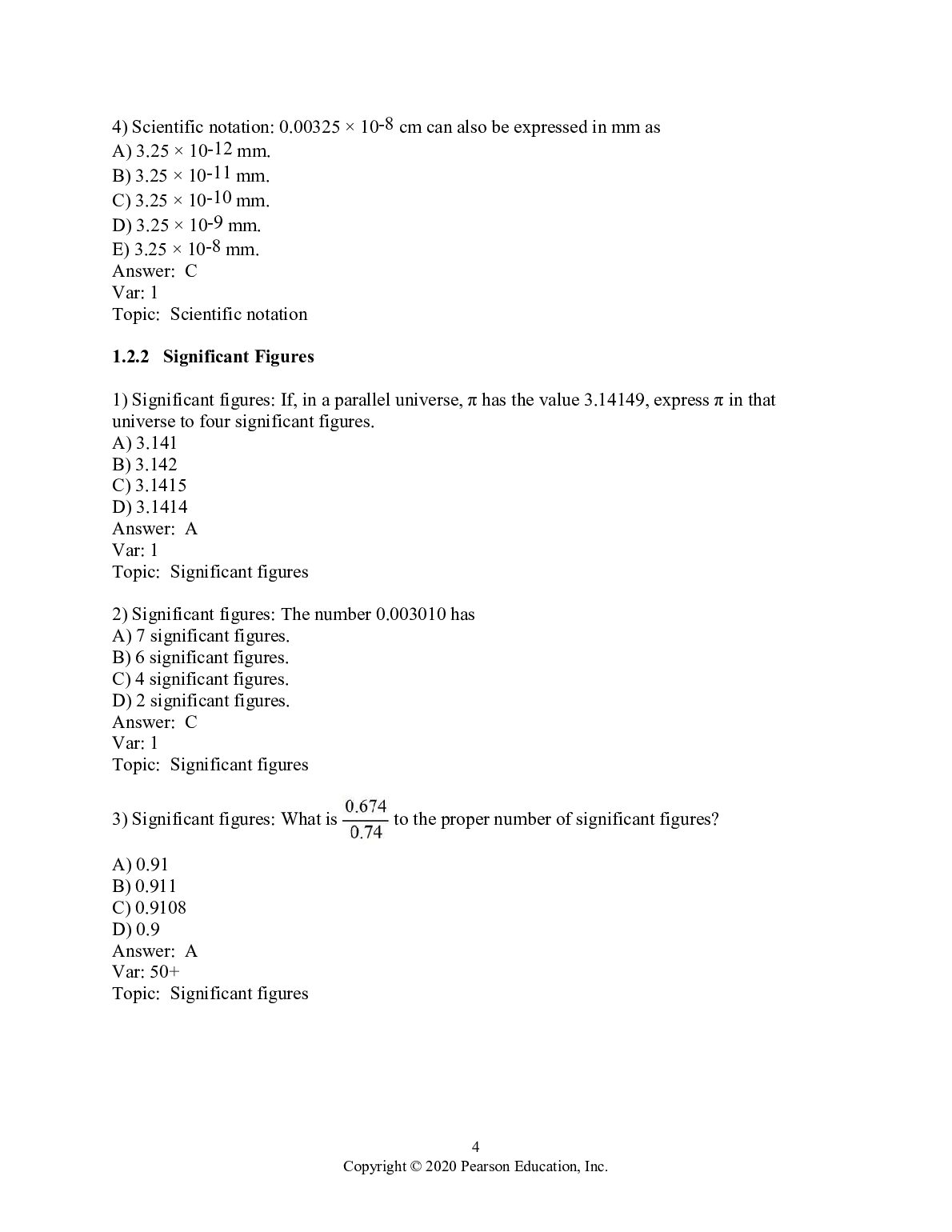
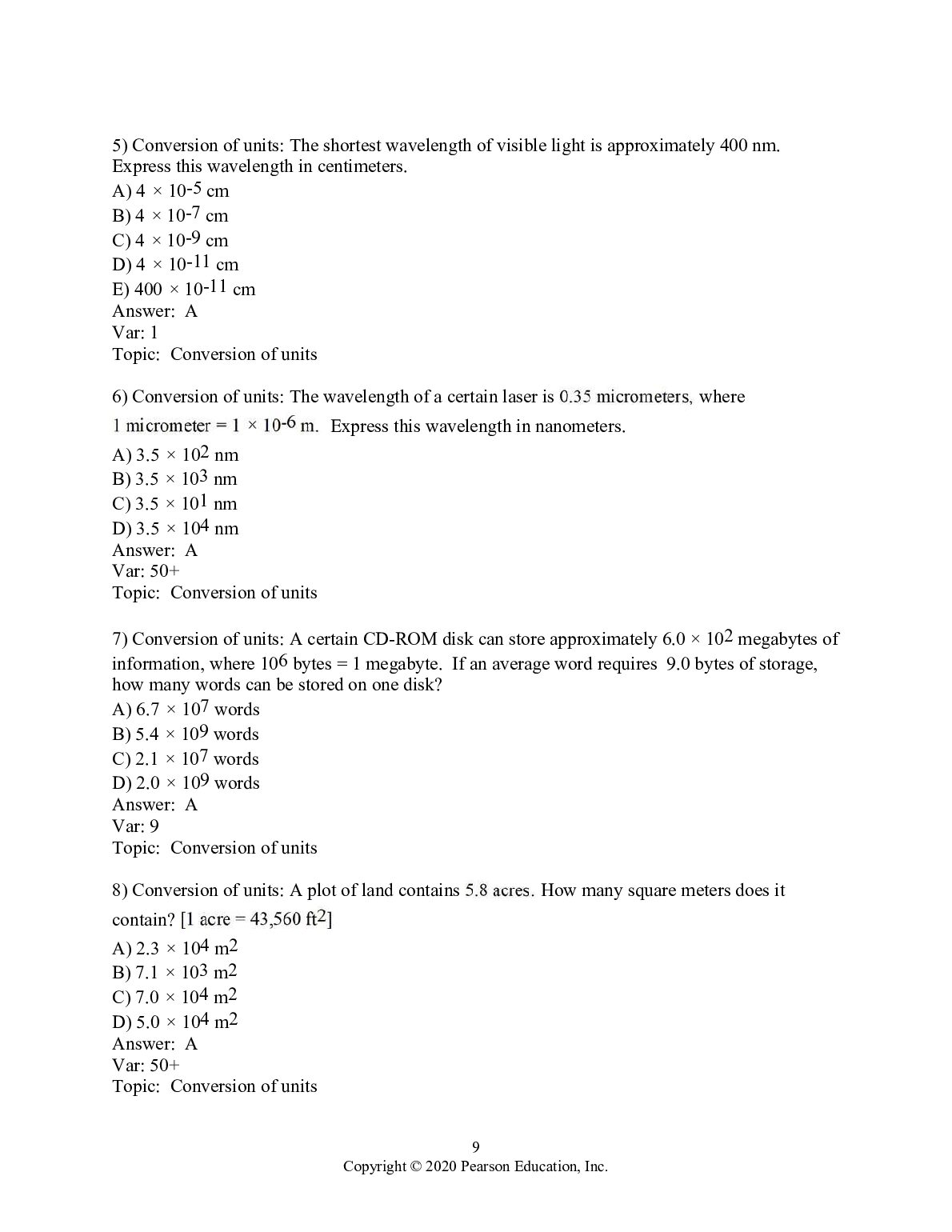
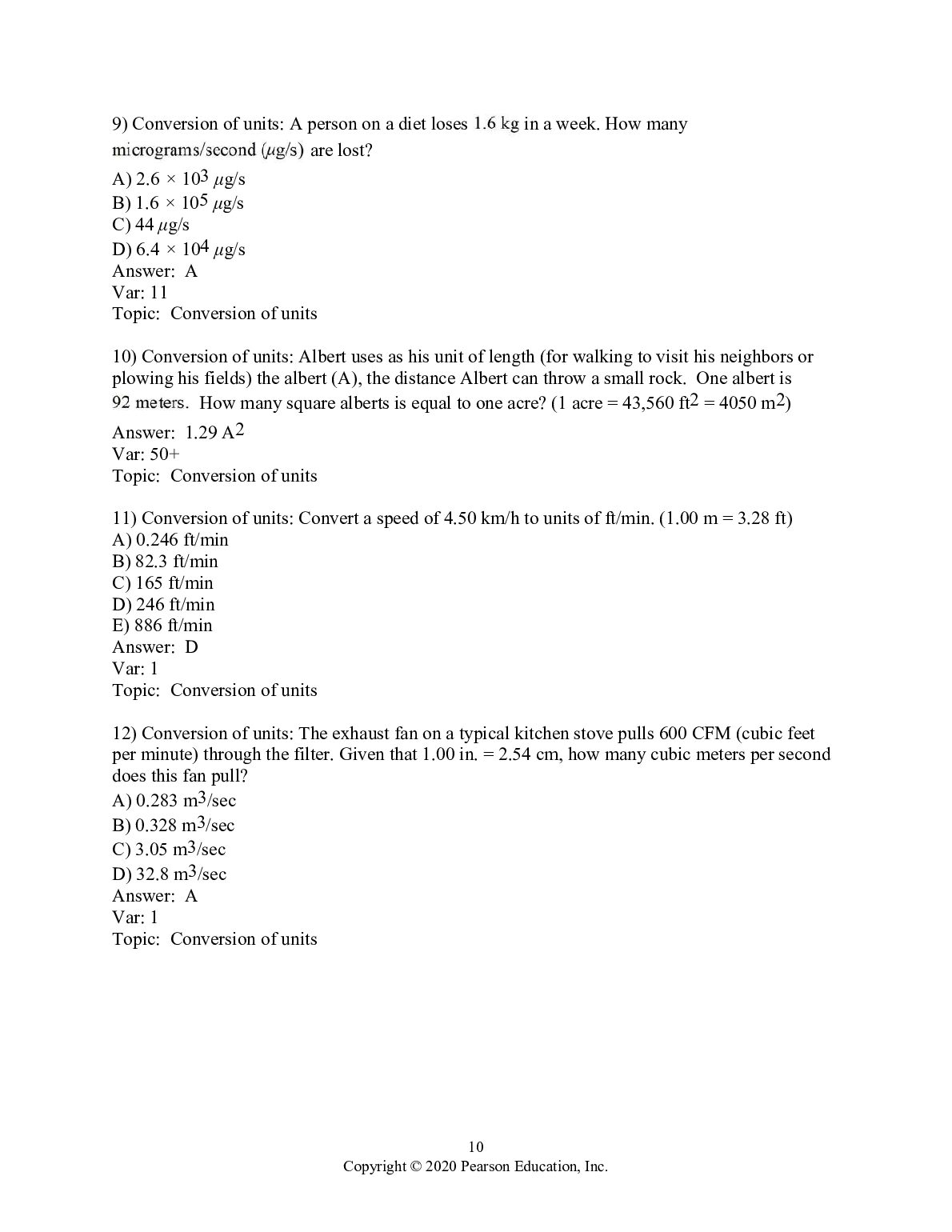
Test Bank for University Physics for the Life Sciences (1st Edition) by Randall Knight, Brian Jones, and Stuart Field blends light calculus-based physics with biology and medical applications. The book spans 30 chapters structured across six core thematic parts, with a strong emphasis on MCAT preparation and physiological processes. [1, 2, 3]
Part I: Force and Motion (Chapters 1–9)
...[Show More]
Test Bank for University Physics for the Life Sciences (1st Edition) by Randall Knight, Brian Jones, and Stuart Field blends light calculus-based physics with biology and medical applications. The book spans 30 chapters structured across six core thematic parts, with a strong emphasis on MCAT preparation and physiological processes. [1, 2, 3]
Part I: Force and Motion (Chapters 1–9)
Covers mechanics, biomechanics, and scaling in biology (Chapters 1–9), including models, kinematics, force, momentum, and fluid dynamics relevant to blood flow. [1, 2, 3, 4, 5]
Part II: Energy and Thermodynamics (Chapters 10–14)
Exores energy transfer and transformation in biological systems (Chapters 10–14), covering work, energy, thermodynamics, kinetic theory, and entropy/free energy linked to metabolism. [1, 2, 3, 4]
Part III: Oscillations and Waves (Chapters 15–17)
Focuses on periodic motion, acoustics, and auditory communication in living organisms (Chapters 15–17). [1, 2, 3]
Part IV: Optics (Chapters 18–20)
Examines light, vision mechanics, and medical instruments like microscopes and corrective lenses (Chapters 18–20). [1, 2]
Part V: Electricity and Magnetism (Chapters 21–27)
Addresses electromagnetic fields and bio-electricity, including neural pathways, action potentials, circuits, and induction (Chapters 21–27). [1, 2, 3, 4, 5]
Part VI: Modern Physics (Chapters 28–30)
Explores molecular and atomic scale physics (Chapters 28–30) with applications in medical imaging such as X-rays, MRI, and nuclear physics. [1, 2, 3]
[Show Less]